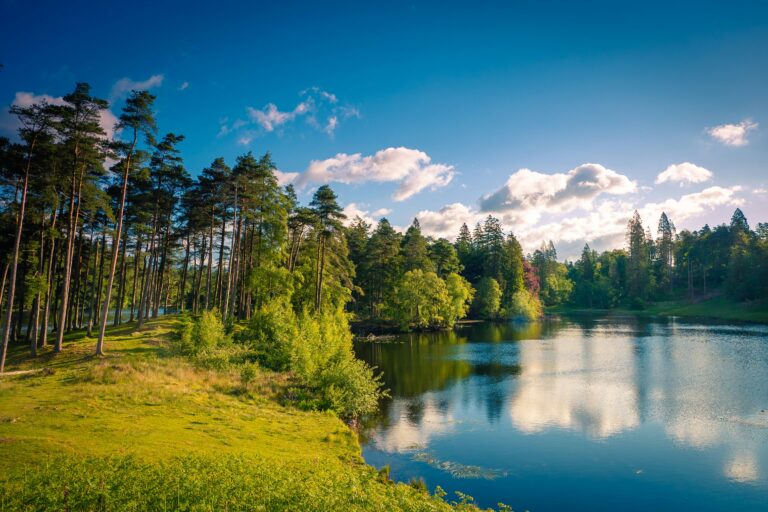
We’re lucky to live in a time where people are more conscious and mindful of their mental health than ever before. Conversations about therapy and medication are becoming increasingly visible, but another thing that plenty of people are discussing is the indelible relationship between nature and mental health.
Going outside isn’t going to solve all of your problems; this much is true. However, there is a mountain of evidence showing that connectivity to nature is more than a luxury; it is essential for human health. This is especially true in an age where digital fatigue is hitting an all-time high, leading people to consciously and subconsciously yearn for fresh air.
This article will explore how everything from short walks in your nearest forest to weekend-long Lake District breaks can help you feel more centred.
How does spending time in nature improve mental health?
Stress reduction on multiple fronts
It’s not just new age concepts. Being around nature literally has tangible physiological impacts on your nervous system. Natural surroundings switch the body from its sympathetic to parasympathetic mode, allowing it to rest and digest more effectively.
It’s important to note that you should spend at least 20 minutes in green spaces to effectively lower your cortisol levels. With just this much time, you can have a more powerful effect than traditional indoor techniques.
Reduced rumination
Stress can often come from those negative thought patterns that we can’t fall out of. The relationship between being in nature and mental health shows that those valuable minutes outdoors can help with those spirals. Nature walks are shown to reduce activity in the subgenual prefrontal cortex, which is where those morbid ruminations come from.
Some also find that the vastness of landscapes helps them to contextualise their problems, making them feel smaller and more manageable.
Attention Restoration Theory (ART)
This theory, also known as Soft Fascination Theory, states that modern life requires constant, directed attention, which eventually wears out the mind. Nature allows the mind to be captivated without the need for any conscious effort. You don’t have to use your brain’s focus filters, giving them a chance to wind down. This is why taking walks and hikes are some of the best natural energy boosters for mental clarity in different areas of life.
Improved sleep quality
Exposure to natural light is a massive regulator of your circadian rhythm, especially if you’re able to get it in the earlier hours of the day. It helps to regulate your brain’s regular melatonin release, which has a significant impact on the body’s biological clock. In a world where the average person has been disrupted by blue light, the principles of nature and mental health can guide you to much better sleep.
Answering your innate evolutionary need for biophilia
Biophilia theory states that humans quite literally need to connect with other forms of natural life, encompassing plants, animals and everything in between. Real interactions with nature will engage all five senses, grounding humans in the present and allowing for real-time meditation to take place, without the same need for focused practice.
The nature-mental health connection can also be linked to phytoncides, organic compounds emitted by trees that help to enhance the physical immune system. As the saying goes, healthy body, healthy mind.
Taking your mental health seriously
It’s worth remembering that being around nature can definitely have some benefits for your mental health, but it’s no substitute for proper talk therapy or medication when necessary. If you’re struggling, don’t be afraid to reach out to a professional and get to the bottom of your problem.